
If your law firm’s website feels like it is shouting into a void, you are likely focusing on the wrong targets. Many practitioners spend thousands chasing broad, highly competitive terms like “Sydney lawyer” or “Brisbane solicitor,” only to find the traffic they receive is generic and rarely converts into a signed retainer. In 2026, the secret to visibility isn’t just appearing on page one; it is knowing how to rank higher on Google for specific legal services that match the exact moment a client needs your help.
The Shift to High-Intent Specialisation
The way Australians search for legal help has changed. Modern clients do not just look for a “family lawyer”; they search for “how to apply for a recovery order in Melbourne” or “binding financial agreement costs NSW.” These are high-intent queries. When you optimise for these specific phrases, you are not just building traffic; you are building a bridge to someone who is ready to pick up the phone.
Ranking for specific services requires a departure from “digital brochure” style websites. Google’s algorithms now prioritise “topical authority.” This means if you want to rank for “medical negligence,” you cannot simply have one page with 500 words of text. You need a comprehensive ecosystem of content that proves to Google, and your potential clients, that you are the leading expert in that specific sub-niche.
Want to learn more about this? We recently ran a free webinar breaking down how law firms can rank for high-intent legal searches. You can watch the replay here.
Local Authority: Winning the Map Pack
For most Australian firms, the most valuable real estate on the search engine results page (SERP) is the Local Map Pack. To rank higher for specific services locally, your Google Business Profile (GBP) must be a reflection of your expertise.
- Service-Specific Categories: Ensure you haven’t just selected “Law Firm.” Use specific categories like “Personal Injury Lawyer” or “Estate Planning Lawyer” if they apply.
- Hyperlocal Proof: Mention local landmarks, specific courts (like the Downing Centre or the County Court of Victoria), and the specific suburbs you serve.
- Review Sentiment: Google now parses the text within your reviews. A review that says, “They helped me with a complex unfair dismissal claim in Parramatta,” carries more weight for that specific service than a generic “Great service” comment.
E-E-A-T: More Than Just an Acronym
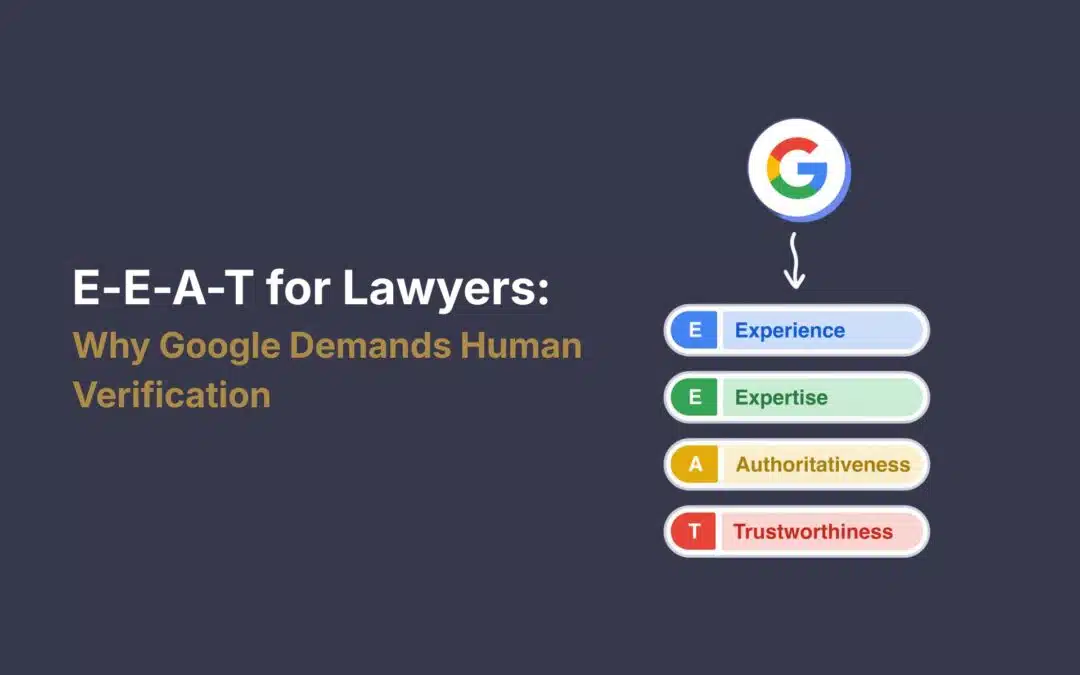
Experience, Expertise, Authoritativeness, and Trustworthiness (E-E-A-T) are the pillars of legal SEO. Google treats legal information as “Your Money or Your Life” (YMYL) content, holding it to the highest possible standard of accuracy.
To rank higher for a specific service, each service page should be authored by a specialist whose credentials are clear. This involves using “Person Schema” in your website’s code to link the content to a lawyer’s professional bio, their LinkedIn profile, and their admission to the relevant Law Society. When Google can verify that the person writing about “commercial litigation” is a practitioner with fifteen years of experience in that field, your rankings will naturally climb.
The Structure of a High-Ranking Service Page
A common mistake is trying to rank for ten different services on one “Our Services” page. This dilutes your relevance. Instead, create dedicated landing pages for every specific service you offer. A high-ranking page should include:
- A Clear, Direct Answer: If the user is searching for a specific legal process, explain it in the first paragraph.
- Structured Subheadings: Use H2 and H3 tags that mirror common client questions (e.g., “What are the stages of a property settlement?”).
- Local Context: Mention specific Australian legislation, such as the Family Law Act 1975 or the Civil Liability Act 2002 (NSW).
- Multimedia Integration: A 60-second video of a lawyer explaining a specific service can significantly increase “dwell time,” a key signal to Google that your page is helpful.
Topical Clusters: Dominating the Niche
Think of your website as a library. If you only have one book on “Criminal Law,” you aren’t an authority. If you have a section with books on “Drink Driving,” “Assault Charges,” “Bail Applications,” and “Drug Offences,” you become a destination.
This is the “Topical Cluster” model. Your main service page (the “Pillar”) should be supported by multiple blog posts and FAQs (the “Clusters”). Each cluster page should link back to the main service page. This internal linking structure tells Google’s crawlers exactly which page is the most important for that specific topic, helping it rank higher than competitors who have scattered, unrelated content.
Technical Performance and User Experience
In 2026, technical health is no longer a “behind-the-scenes” concern; it is a front-and-centre ranking factor. Google’s “Interaction to Next Paint” (INP) metric measures how quickly your site responds when a user clicks a button or opens a menu. For a lawyer’s website, where clients are often stressed or in a hurry, a slow or unresponsive site leads to high bounce rates.
Ensure your site is mobile-first. Most legal searches in Australia now happen on smartphones. If your “Call Now” button is hard to find or your contact form is clunky on a mobile screen, your ranking will suffer regardless of how good your content is.
Optimising for the AI Search Era
With the rise of Google’s AI Overviews, many users get their answers without ever clicking a link. While this sounds daunting, it is actually an opportunity. By structuring your content to provide clear, concise answers to specific legal questions, you increase the chances of your firm being cited as the source of truth by the AI.
Use bullet points for lists of requirements, bold key terms, and ensure your headings are phrased as questions. This “Answer Engine Optimisation” ensures that even if a user doesn’t click through, your brand is established as the primary authority in their mind.
The Compounding Value of SEO
Search engine optimisation is not a one-time task; it is a long-term investment in your firm’s digital equity. Unlike paid advertising, which stops the moment you stop paying, a well-optimised service page continues to attract leads month after month.
By focusing on specific legal services rather than broad categories, you reduce competition and increase the quality of your enquiries. You aren’t just looking for anyone with a legal problem; you are looking for the right client with the right problem that your firm is uniquely qualified to solve.
Need Help Dominating the Search Results?
Watch our recent webinar on exactly this topic. You can watch it when you click the button below.
At Lift Legal Marketing, we specialise in helping law firms increase their visibility and convert high-intent traffic into loyal clients.
Whether you need a comprehensive SEO audit, a content strategy for your practice areas, or a website that finally performs, our team is here to help.
Contact Lift Legal Marketing today to discuss your firm’s growth and marketing needs.
About the author

Peter Heazlewood
Peter Heazlewood is a management and marketing consultant, he specialises in helping law firms develop their practices using business planning marketing and performance reporting techniques refined in his own successful law firm. Peter lives in Sydney with his wife and is the father of five adult children.